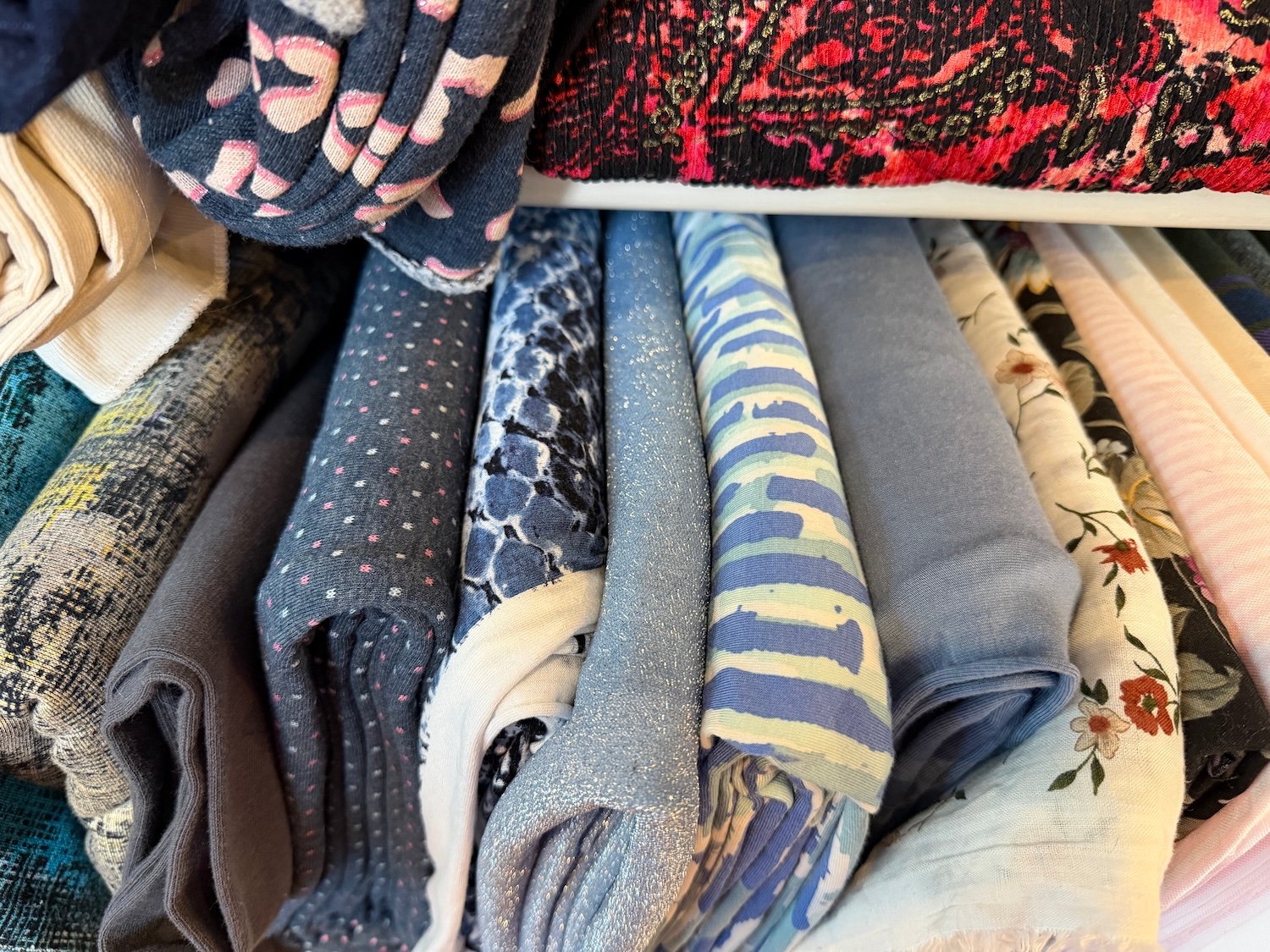
This guide covers everything a beginner needs to know about sewing with jersey and knit fabric including how it differs from woven fabric, which knits to start with, the right needle and stitch to use, and where to buy knit fabric in the UK.
Jersey and knit fabric can feel a little intimidating when you’re just starting out. It moves around, it curls at the edges, and every tutorial seems to tell you something slightly different. But here’s the truth: once you understand how knit fabric works and get a few basics in place, it really is enjoyable to sew with.
My first ever garment made from knit fabric was a t-shirt in a pink animal print. I can’t remember every detail of how it went (I’m sure there were moments!) but I do know the neckband wasn’t my finest work. And that’s completely fine – neckbands on knits are one of the trickier things to get right, and even experienced sewers have a wobble with them now and then.
So let’s start from the beginning and work through what you need to know.
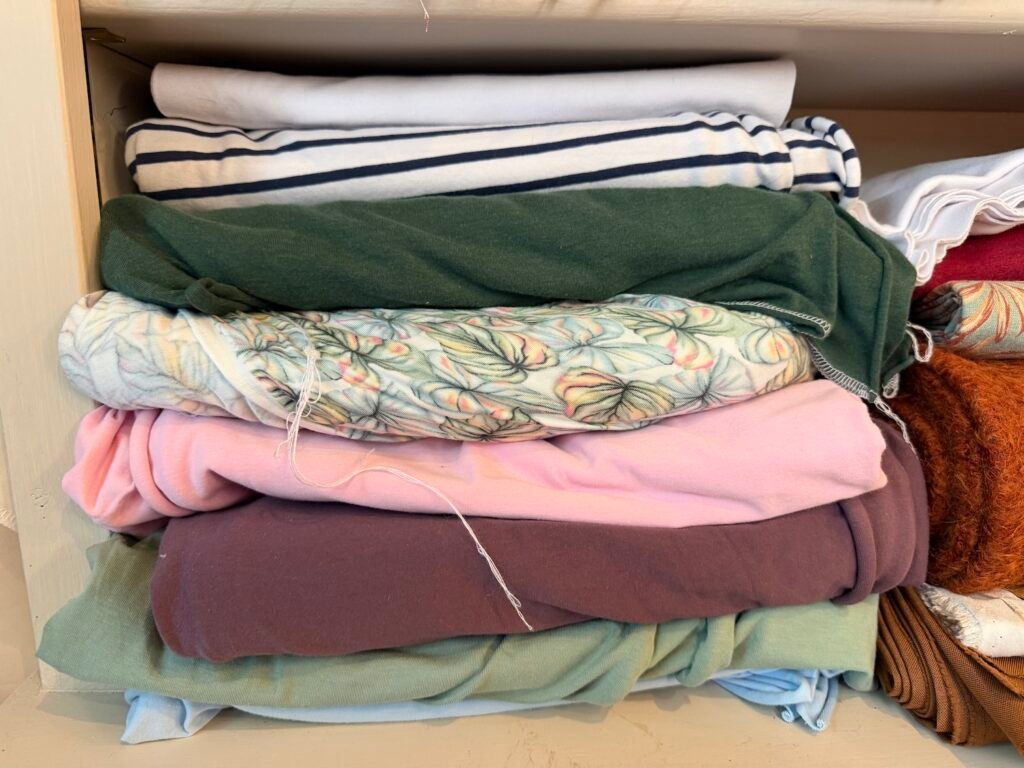
What is Jersey and Knit Fabric?
The key difference between knit fabric and woven fabric comes down to one thing: knit fabric stretches. Often in both directions — lengthwise and crosswise — which is what makes it so comfortable to wear and so brilliant for garments like t-shirts, leggings and dresses.
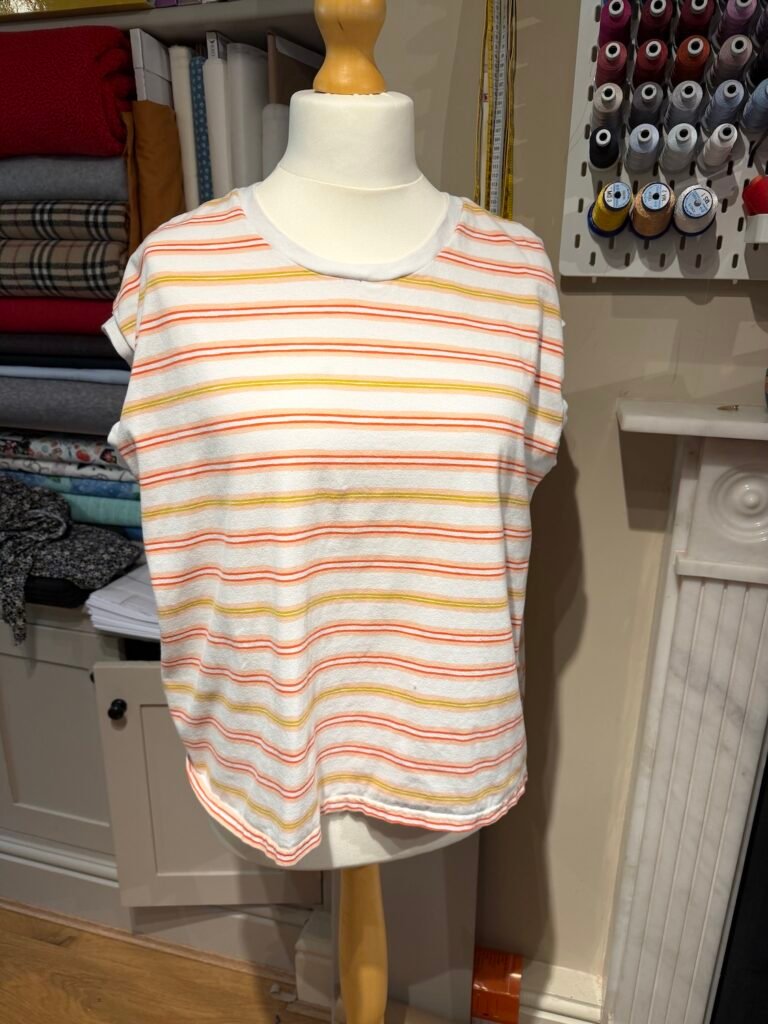
The other big difference is that knit fabric doesn’t unravel when you cut it. With woven fabrics you often need to finish the raw edges to stop them fraying, such as zigzag stitching or an overlocker. Knit fabric doesn’t have this problem, which makes it rather lovely to work with in that respect.
There is one thing to know though: knit fabric curls at the edges. This can make it a bit fiddly to keep everything lined up, especially when you’re pinning pieces together. It’s not a dealbreaker, just something to be aware of and work with patiently.
Grainline also matters with knits, though it can be a little harder to spot than with woven fabrics. Do your best to line it up accurately as it makes a difference to how the finished garment hangs and sits on the body. For a full explainer on grainline, have a read of my grainline post.
Types of Knit Fabric and Where to Start
There are quite a few different types of knit fabric out there, and they don’t all behave the same way. Here’s a quick overview of the ones you’re most likely to come across:
Cotton Jersey
This is where I’d send any beginner. Cotton jersey is more stable than a lot of other knits, which makes it much easier to handle and sew. It’s also widely available, comfortable to wear, and comes in a brilliant range of colours and prints. Start here.
Stretch Jersey / Viscose Jersey
Has more drape and stretch than cotton jersey. Lovely for floaty tops and dresses, but it can be a bit more slippery to work with. One to try once you’ve got a few knit projects under your belt.
Ponte / Ponte Roma
A firmer, more stable knit that holds its shape really well. Great for trousers, structured dresses and skirts. Less stretchy than other knits, which actually makes it easier to sew.
Lycra / Swimwear Fabric
Very stretchy and quite technical to sew. Best left until you’re comfortable with knits generally, it has its own set of challenges that are easier to tackle with a bit of experience behind you.
Setting Up Your Machine for Knit Fabric
Getting your machine set up correctly before you start is really the key to successful knit sewing. Here’s what to do:
Use the Right Needle
For knit fabrics, you need either a ballpoint needle or a stretch jersey needle. I use a stretch jersey needle in size 90/14 for most of my knit projects. The rounded tip is designed to slide between the fabric fibres rather than pierce through them, which prevents snagging and skipped stitches. (For everything you need to know about needle types, pop over to my needle guide)
Choose a Stretch Stitch
This is important. A regular straight stitch doesn’t have any give, which means it will snap when the fabric stretches. Look for the stretch stitch on your machine, most modern machines have one, though it might go by a slightly different name. I use a triple stitch (sometimes called a triple straight stitch), which gives a strong, slightly stretchy seam that works beautifully on knits.
If you have an overlocker, that’s also a brilliant option for sewing knit seams, it trims, finishes and sews all in one go.
Use Polyester Thread
Always use polyester thread for knit fabrics, not cotton. Polyester has a natural stretch to it which means it moves with the fabric rather than snapping under tension. Cotton thread doesn’t have this flexibility and will break.
Consider a Quarter Inch Foot
Many knit patterns use a 1/4 inch seam allowance rather than the standard 5/8 inch you’d use on woven fabrics. If your pattern calls for this, a quarter inch presser foot makes it much easier to sew accurately. I’ll be honest, I don’t always remember to swap my foot over, but when I do it makes a real difference!
My Number One Tip for Sewing Knits
Test your stitches before you start. Every single time.
Cut a scrap of the same fabric, sew a few inches of your chosen stitch, and then pull
the stitched seam gently to check it has enough stretch. The thread should give slightly without snapping. If it breaks, your stitch or thread isn’t right for the fabric.
This applies whether you’re using a regular sewing machine or an overlocker. Two minutes of testing at the start saves a lot of unpicking later.
Where to Buy Jersey and Knit Fabric in the UK
Here are my favourite places to pick up knit and jersey fabric in the UK:
Abakhan — my local shop and a brilliant option if you have one nearby. Great range and good value. Also available online at abakhan.co.uk
Pound Fabrics — excellent online shop for affordable jersey and knit fabrics. Great for stocking up on basics without spending a fortune at poundfabrics.co.uk
Lamazi Fabrics — lovely range of quality jersey fabrics online, including some beautiful prints at lamazifabrics.com
Ready to Give Knits a Go?
Jersey and knit fabric opens up a whole new world of making comfortable, wearable garments that you’ll actually love. Start with a cotton jersey, take your time setting up your machine properly, and do that test seam before you dive in.
If you’d like more beginner guidance, come and join my free Sewing Library – there’s plenty in there to help you build your skills and confidence. And if stretch stitches are new territory, keep an eye out for my upcoming post on types of stretch stitch and when to use them.
Any questions? Pop me an email here, I’d love to help.
Happy sewing!
Louisa x
Jersey is a type of knit fabric – all jersey is knit fabric, but not all knit fabric is jersey. Jersey is the most common knit fabric you’ll come across and is used for t-shirts, dresses and tops. Other knit fabrics include ponte, ribbing and fleece.
Yes, absolutely. You don’t need a special machine to sew knits. Use a stretch or ballpoint needle, switch to a stretch stitch (most machines have one), use polyester thread, and you’re good to go.
This is usually one of two things: either you’re using cotton thread (switch to polyester) or you’re using a straight stitch with no stretch (switch to a stretch stitch or zigzag). Always pull your test seam before starting a project to check the thread has enough give.
Cotton jersey is the best starting point. It’s more stable than other knits, widely available in the UK and much easier to handle. Avoid very stretchy fabrics like Lycra until you’re more confident.
No, an overlocker is helpful but not essential. A regular sewing machine with a stretch stitch and the right needle will do the job perfectly well for a beginner.
