What’s this blog about?
This guide covers everything a beginner needs to know about sewing machine needles including how to read needle sizes, which needle type to use for different fabrics, when to change your needle, and which brands to look for in the UK.
If you’ve ever had a seam pop open, stitches skip across the fabric, or a needle snap mid-project, there’s a good chance the sewing needle was to blame. Getting your needle right makes an enormous difference.
I’ll be honest, I’ve made all the classic needle mistakes myself. I once used completely the wrong needle for a knit fabric and ended up with skipped stitches and seams that popped open almost immediately. And I’ve snapped more needles than I care to admit, usually because I’d left an old one in too long or paired it with the wrong thread.
The good news is that once you understand how needles work, it all becomes very simple. So let’s go through it.
Understanding Sewing Machine Needle Sizes
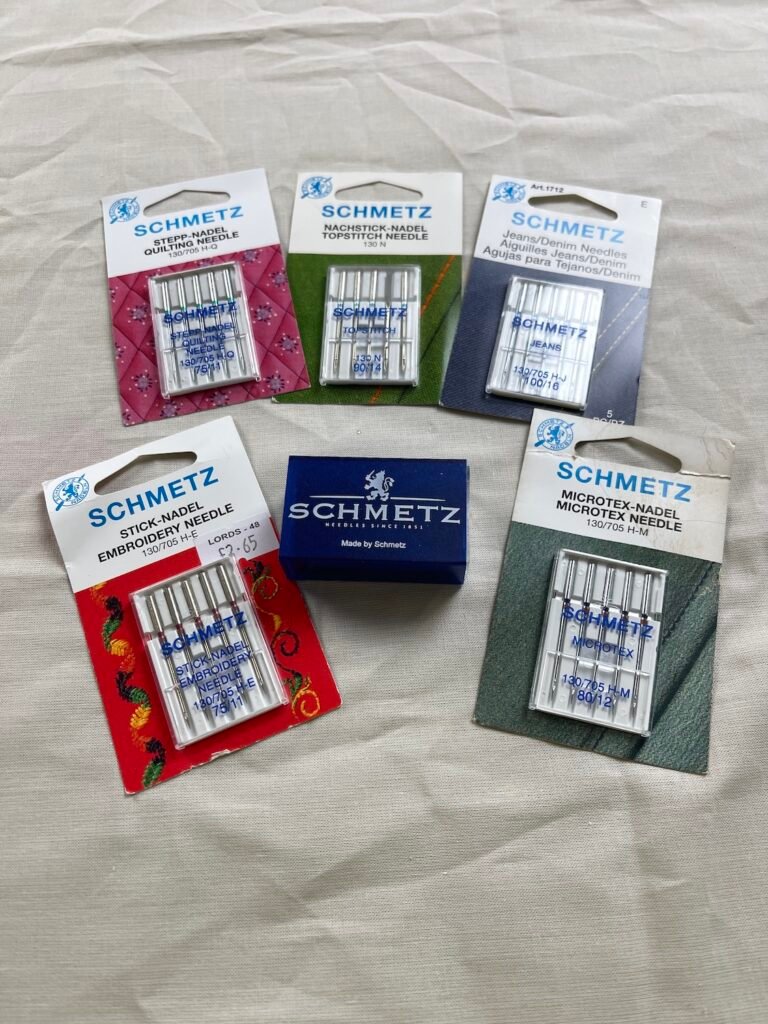
Needle packets show two numbers separated by a forward slash, something like 80/12 or 90/14. If you’ve ever wondered why American sewing tutorials seem to use different numbers to UK ones, here’s why.
- The first number (80, 90, 100 etc.) is the metric size used in the UK and Europe.
- The second number (12, 14, 16 etc.) is the American size.
They mean exactly the same thing, they’re just measured differently. So if a UK pattern says size 80 and an American YouTube tutorial says size 12, they’re referring to the same needle.
The golden rule for needle sizes: the smaller the number, the finer the fabric. A lightweight needle for delicate fabric, a heavier needle for thick or tough materials.
Types of Sewing Machine Needle
The needle size tells you how heavy the needle is, but the type of needle tells you what it’s designed for. Here are the ones you’ll come across most often:
Universal Needle
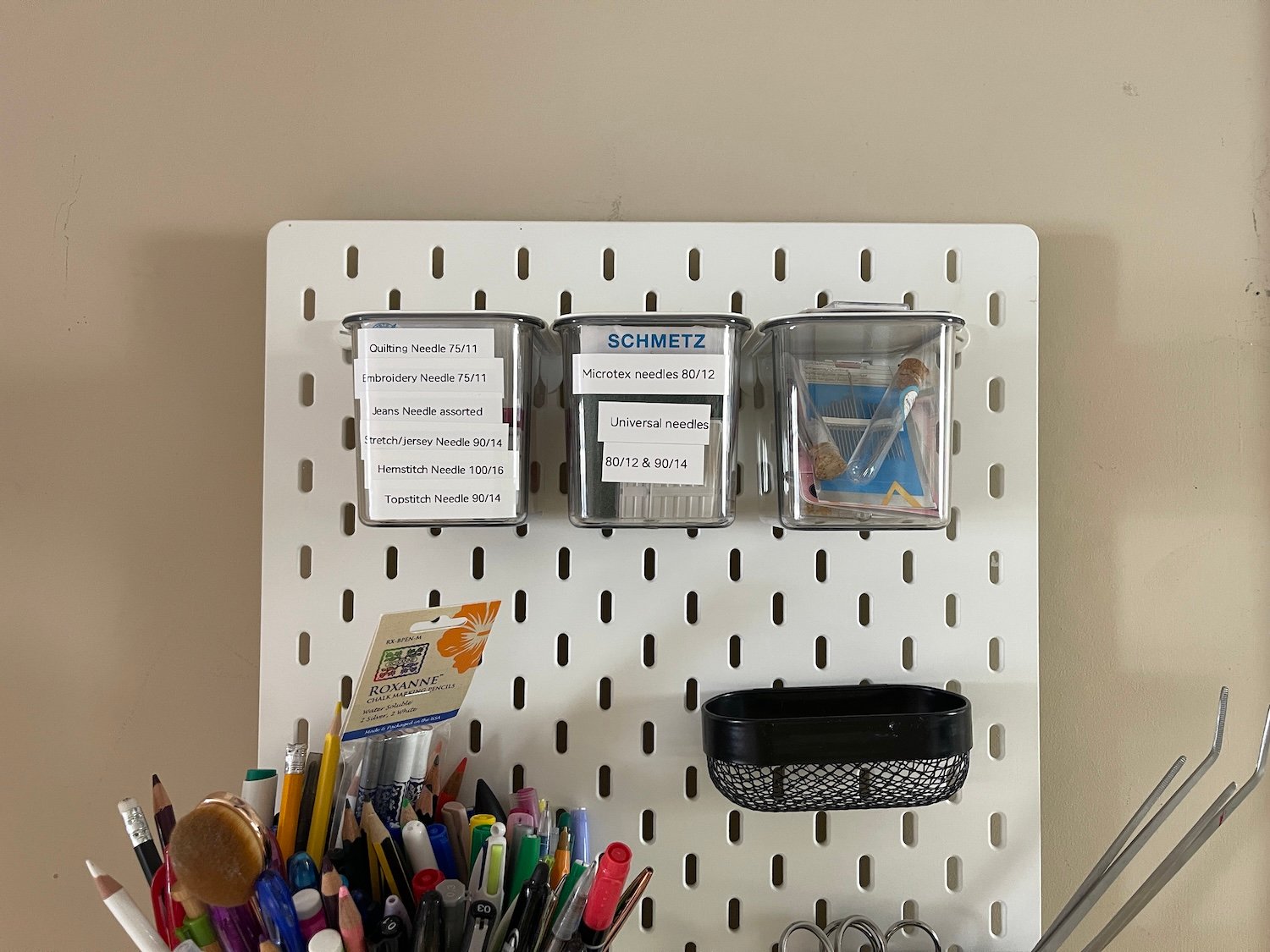
The needle you’ll reach for most of the time. It has a slightly rounded tip that works on both woven and knit fabrics, which makes it a reliable all-rounder. My most used sizes are 80/12 and 90/14. If you’re not sure what needle to use, start here.
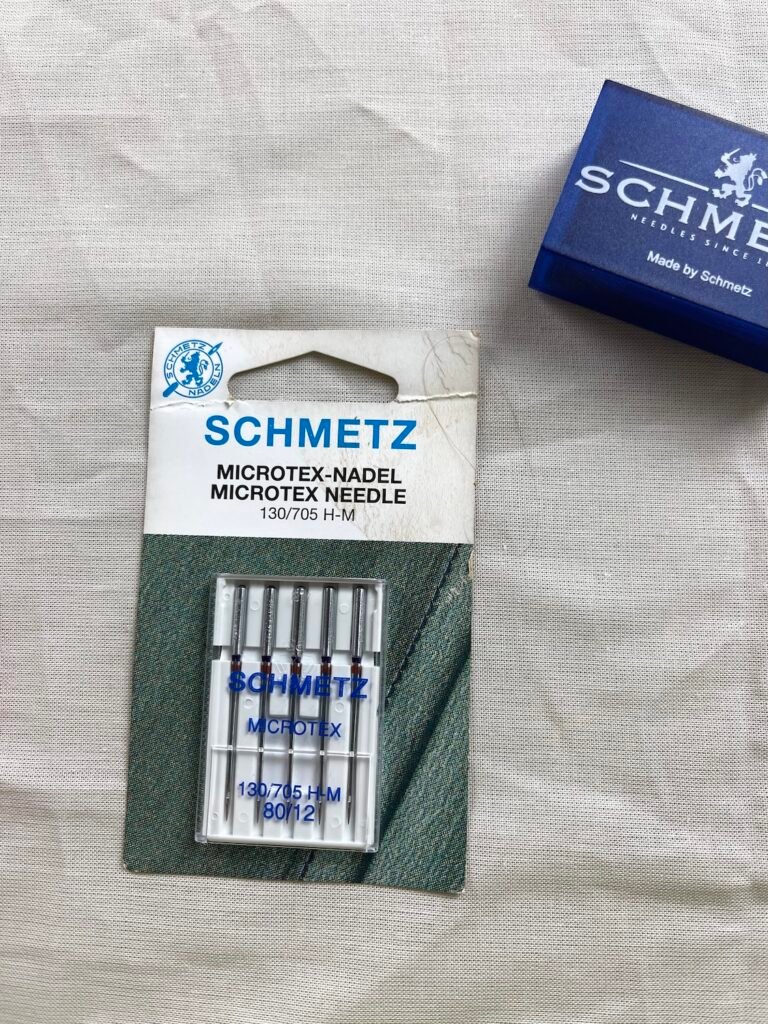
Microtex (Sharp) Needle
A very fine, sharp needle designed for lightweight and closely woven fabrics — silk, microfibre, tightly woven cotton. The sharp tip pierces the fabric cleanly without snagging or pulling threads. My go-to size is 80/12. If you’re sewing something delicate, this is the one to reach for.
Ballpoint / Jersey Needle
Designed specifically for knit and stretch fabrics. The rounded tip slides between the fibres rather than piercing through them, which stops the fabric from snagging or laddering. This is the needle I wish I’d used that time I had all the skipped stitches. If you’re sewing jersey, t-shirt fabric, or anything stretchy, use a ballpoint needle.
Stretch Needle
Similar to a ballpoint but with a slightly different design that helps prevent skipped stitches on very stretchy fabrics like Lycra or swimwear material. If a ballpoint needle isn’t quite cutting it, try a stretch needle.
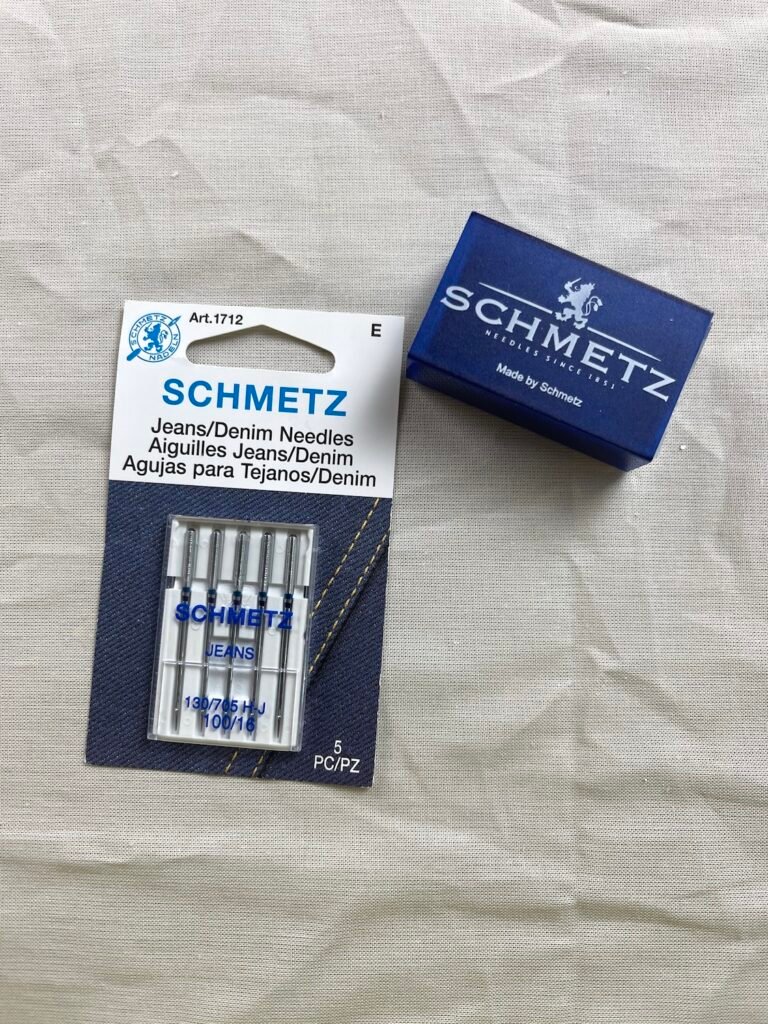
Denim / Jeans Needle
A strong, sharp needle designed to power through thick, tightly woven fabrics like denim, canvas, and heavy twill. If you’re attempting jeans or a bag made from heavyweight fabric, this is your needle.
Leather Needle
Has a wedge-shaped tip that cuts through leather and suede rather than pushing the fibres aside. Only use this on actual leather or vinyl, it will damage woven fabrics.
Wing Needle
Used for decorative hemstitch work on natural woven fabrics like linen and cotton. The little “wings” on the needle create tiny holes in the fabric as it sews, giving a beautiful heirloom effect. Not something you’ll need as a complete beginner, but lovely to know about for later.
Twin Needle
Two needles on one shank, used for creating decorative parallel stitching or for hemming stretch fabrics on a regular sewing machine. A brilliant trick for getting a professional-looking stretch hem without a coverstitch machine.
Which Sewing Needle Brand Should You Use?
My go-to brand is Schmetz, with Organ as a good occasional alternative. Both are widely available and consistently reliable. If you find a brand that works well with your machine, stick with it.
Where to Buy Sewing Machine Needles in the UK
Needles are available from most haberdashery shops, online retailers and sewing dealers. Hobbycraft, John Lewis and Sewing Direct all stock a good range, as do BarnYarns and Abakhan.
How Often Should You Change Your Sewing Needle?
The official advice is to change your needle with every new project. In all honesty, I don’t always do this, and I suspect most sewers don’t either. But there are a couple of signs that tell you it’s definitely time for a change:
- Skipped stitches: the machine suddenly starts missing stitches it was making perfectly before
- A dull thud or clunking sound: if your machine sounds like it’s working harder than usual, clunk clunk clunk, that’s usually a blunt needle struggling to pierce the fabric
- Snagged or pulled threads: a sign the needle tip is damaged or dull
When in doubt, change it. Needles are inexpensive and a fresh one can completely transform your sewing.
Common Needle Mistakes Beginners Make
- Using the wrong needle for the fabric
- the most common mistake and the cause of most needle-related disasters. Check the fabric, check the needle.
- Not changing the needle often enough
- a blunt needle is the enemy of good stitching. If something seems off, try a new needle first.
- Using the wrong thread with the needle
- a very fine needle with thick thread will snap. Make sure thread weight matches needle size.
- Forgetting to check needle position
- always make sure the needle is fully inserted and the flat side is facing the back before you start.
To Sew Up My Thoughts (sorry!)
Once you get into the habit of checking your sewing needle before every project, it just becomes second nature and your sewing will thank you for it.
If you found this helpful, come and join my free Sewing Library for more beginner guides and free resources. And if you haven’t already, have a read of my posts on essential sewing equipment and seam allowances, both good ones to have under your belt early on.
Any questions? Pop me an email, I’d love to hear from you.
Happy sewing!
Louisa x
Common Questions
Match your needle type to your fabric and your needle size to the fabric weight. As a general rule: the smaller the needle number, the finer the fabric. Use a universal needle for most woven fabrics, and a ballpoint or stretch needle for knits.
Needles show two numbers – for example 80/12. The first number is the European metric size used in the UK, and the second is the American size. They refer to the same needle, just measured differently.
The official advice is with every new project. In practice, change it when you notice skipped stitches, a dull thudding sound from the machine, or snagged threads – all signs the needle is past its best
Yes, this is one of the most common causes of skipped stitches. Using a sharp needle on a knit fabric, or a needle that’s too fine for a heavy fabric, can both cause stitching problems. Always match needle type to fabric type!
Schmetz is a reliable, widely available brand and a great starting point. Organ is another good option. Find a brand that works well with your machine and stick with it.