This guide covers the sewing machine accessories every beginner needs, which presser feet are actually worth having, what not to waste your money on, and where to buy accessories in the UK.
Walk into any sewing shop or have a browse online and you’ll quickly discover that sewing machine accessories could easily become a hobby in themselves. There are feet for every occasion, gadgets for every technique, and approximately one hundred things that look incredibly useful right up until the moment you realise you’ve no idea what they do.
The good news is that you don’t need much to get started. A few well-chosen accessories will see you through most beginner projects, and the rest can wait until you actually need them.
Here’s my honest guide to what’s worth having, what’s worth knowing about for later, and what I’d pop back on the shelf.
Which sewing machine accessories do you actually need?
Before we get into feet and gadgets, there’s one accessory that I’d put at the top of every beginner’s list, and it’s not a glamorous one.
Extra Bobbins
Empty bobbins. Buy more than you think you need. There is nothing more frustrating than being mid-project, running out of thread on your bobbin, and having to wind the thread off before you can refill it. A good supply of empty bobbins means you can wind several up in different colours and switch between them without the palaver. It’s a small thing that makes a surprisingly big difference to your sewing session.
Sewing Machine Needles
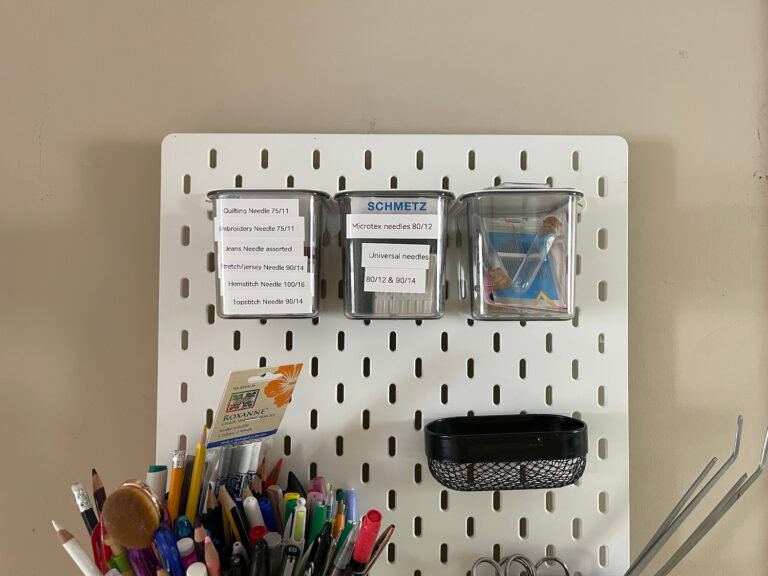
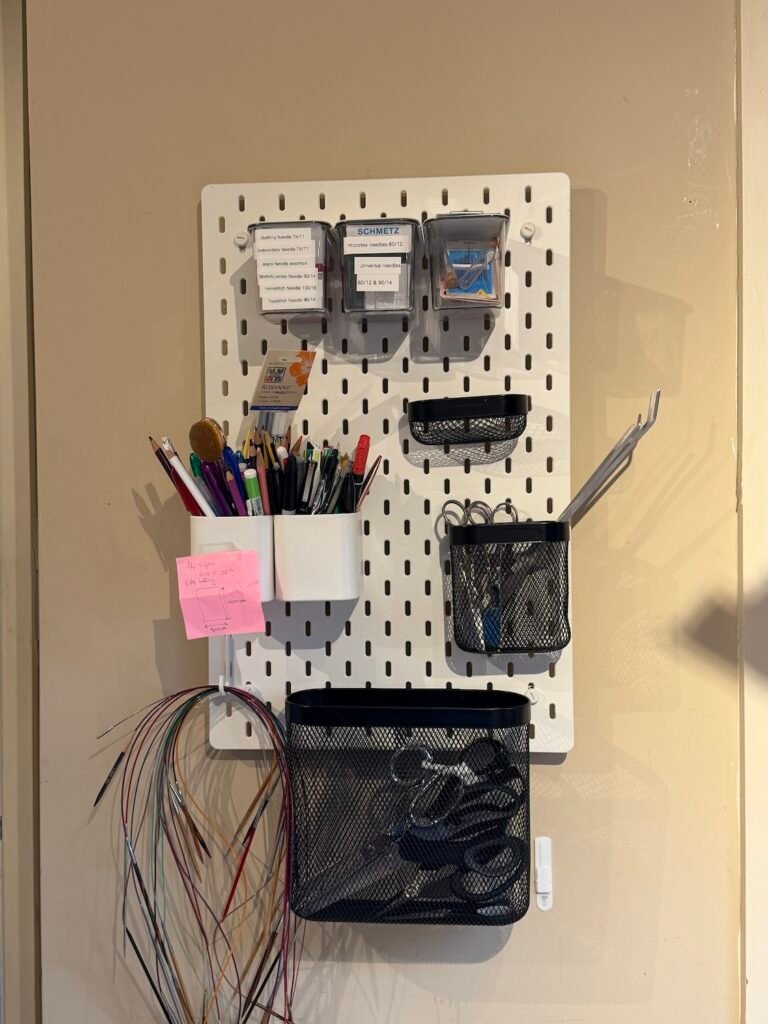
Technically a consumable rather than an accessory, but no less essential for that. Always keep a good selection in stock — different types for different fabrics, and always a spare of your most-used size. I’ve written a full guide to sewing machine needles if you need a refresher on which to use when.
A Seam Ripper
Your most-used tool, whether you like it or not. A good seam ripper unpicks stitches cleanly without damaging the fabric. Keep one close to your machine at all times — you’ll need it.
Sewing Machine Oil
Check your machine’s manual as many modern machines don’t need oiling, but some do. If yours does, a small bottle of sewing machine oil is worth keeping in your sewing kit. Regular maintenance keeps your machine running smoothly and extends its life considerably. And do take your machine for a proper service with a dealer every year or so if you sew regularly.
Which presser feet should a beginner have?
Your machine will come with a standard set of presser feet, and for most beginners that’s plenty to be going on with. Here are the ones I actually reach for:
Standard (All-Purpose) Foot
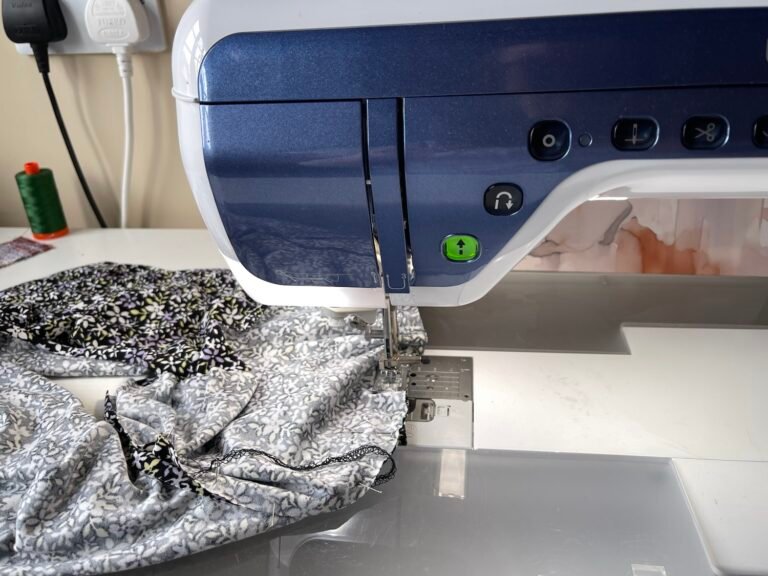
This is the foot your machine probably has on it right now, and it will be on it for the majority of your sewing. Straight stitching, zigzag, most basic techniques, well this foot does the lot. You don’t need to swap it out unless a technique specifically calls for something else.
Quarter Inch Foot
This is the foot I’d add to your collection earliest. It has a guide that sits exactly 1/4 inch from the needle, which makes sewing accurate 1/4 inch seam allowances effortless. If you’re sewing quilts, patchwork, or any knit garment patterns (which often use 1/4 inch seams), this foot is worth every penny. I honestly use it constantly.
Zipper Foot
You probably won’t need this as a complete beginner, but it’s good to know it exists. A zipper foot lets you sew close to the zip teeth, which is essential for a neat result. Most machines come with one included so have a look in the accessories box that came with your machine before buying a new one.
Walking Foot
A walking foot feeds both layers of fabric through the machine evenly at the same time, rather than just the bottom layer. This is brilliant for knit fabrics, matching stripes at the seams, and quilting. It looks a bit mechanical and can seem intimidating, but once it’s on the machine it’s wonderfully straightforward to use. (I mentioned this in my notions post too as it’s one of those things that solves a problem you didn’t know you had.)
Buttonhole Foot
Most machines come with a buttonhole function and a dedicated foot to match. When you need buttonholes, this foot makes them far more consistent and accurate than attempting them freehand. Worth knowing where it is in your accessories box before the moment arrives.
What have I bought and never used?
Honesty time: I own a tube turner. I have no idea why I bought it. I have certainly never used it. It sits in my sewing kit looking mysterious and I suspect it will continue to do so for the foreseeable future.
I mention this because it’s very easy, especially when you’re new to sewing and everything looks useful, to end up with a collection of accessories you don’t actually need. A tube turner is for turning fabric tubes the right way out (straps, belt loops, that sort of thing). It’s a perfectly valid tool. I just haven’t needed it yet.
The lesson: buy accessories as you need them for specific projects, not speculatively. Your sewing kit will thank you.
What should you look for when buying sewing machine accessories?
With sewing accessories, as with most things, you tend to get what you pay for. A cheap presser foot that doesn’t sit correctly on your machine, or a bobbin that doesn’t fit quite right, will cause you more frustration than it saves in cost. It’s the classic buy cheap, buy twice situation. Clover and Hemline are both reliable brands I’d point you towards, not the cheapest on the market, but the quality is consistent and they’re widely available in the UK.
Check compatibility with your machine
Not all presser feet fit all machines. Before buying any accessory, check that it’s compatible with your specific make and model. Most machine manufacturers sell their own branded accessories, and third-party feet are often available too — but do check before you order to avoid disappointment.
Check what came with your machine first
Before buying anything new, have a proper look through the accessories that came in the box with your machine. You might be surprised what’s already in there — many machines come with a zipper foot, buttonhole foot, blind hem foot and more, all included. No point buying something you already own.
Where to buy sewing machine accessories in the UK?
Here are the places I’d recommend:
– Your sewing machine dealer is always the first port of call for machine-specific accessories and feet. They’ll know exactly what’s compatible.
– Sewing Direct — great online shop with a wide range of accessories and notions.
– Hobbycraft — good for basics and widely available across the UK.
– Your local fabric or haberdashery shop often stock a good selection of notions and accessories, and staff can be really helpful with advice.
Start off simple and build from there
The accessories that will serve you best as a beginner are the ones you’ll actually use like extra bobbins, a reliable seam ripper, a quarter inch foot, and a good supply of needles. Everything else can wait until a specific project calls for it.
For more beginner guidance, come and join my free Sewing Library — there’s plenty in there to help you get set up with confidence.
Got a question about any of this? Pop me an email — I’d love to hear from you.
Happy sewing! Louisa x
Frequently Asked Questions
The most essential accessories are extra bobbins, a good supply of sewing machine needles, and a reliable seam ripper. In terms of presser feet, a standard foot and a quarter inch foot will cover most beginner projects.
Start with the standard all-purpose foot that came with your machine and add a quarter inch foot as soon as you can. A walking foot is worth getting once you start sewing knit fabrics or quilts. Check what came in the box with your machine before buying anything — you may already have more than you think.
No — presser feet need to be compatible with your specific machine make and model. Always check compatibility before buying. Your machine dealer is the safest first port of call for accessories.
Clover and Hemline are both reliable brands widely available in the UK. They’re not the cheapest options but the quality is consistent. With sewing accessories, buying cheap often means buying twice.
Your sewing machine dealer is always the best first stop for machine-specific accessories. Sewing Direct and Hobbycraft both stock a good range online and in store. Your local fabric or haberdashery shop is also worth trying.