If you’ve ever stood in the sewing aisle of a craft shop feeling completely overwhelmed, you’re not alone. There is a LOT of sewing equipment out there, and half of it you don’t need, especially when you’re just getting started.
The good news is you really don’t need much to start sewing. A few well-chosen tools, bought once and looked after properly, will see you through years of happy crafting.
1. A Sewing Machine (Obviously!)
Let’s start with the big one. You don’t need an expensive machine to begin with, in fact, I’d actively encourage you not to spend a fortune until you know sewing is something you want to stick with.
A basic mechanical machine with a handful of stitches is absolutely fine for a beginner. Look for something with a good straight stitch, a zigzag stitch, and ideally a buttonhole function. That’s all you need to start.
I’ve only ever sewn with Brother machines myself as I find them good quality and fairly intuitive, which is exactly what you want when you’re learning. That said, my best advice is to head to your local sewing machine dealer and try out a few makes and models before you commit. Everyone’s hands are different and what feels right to one person might not suit another.
If you’re looking for somewhere to start, Frank Nutt is an excellent dealer – I bought two of my own machines there (my overlocker and coverstitch). It’s always worth supporting a specialist shop where you can actually get proper advice. You can also find my personal machine recommendations over on my Favourites page.
2. Good Quality Scissors and Keep Them for Fabric Only
This is the hill I will die on. Never, ever use your fabric scissors for paper. It blunts them immediately and you’ll be gutted the next time you try to cut a clean edge.
You’ll want two pairs as part of your core sewing equipment: a larger pair of dressmaking shears for cutting fabric, and a small pair of snips or embroidery scissors for trimming threads. Label your fabric scissors, a bit of ribbon tied to the handle works a treat, so nobody in the house mistakes them for the craft scissors!
3. A Tape Measure
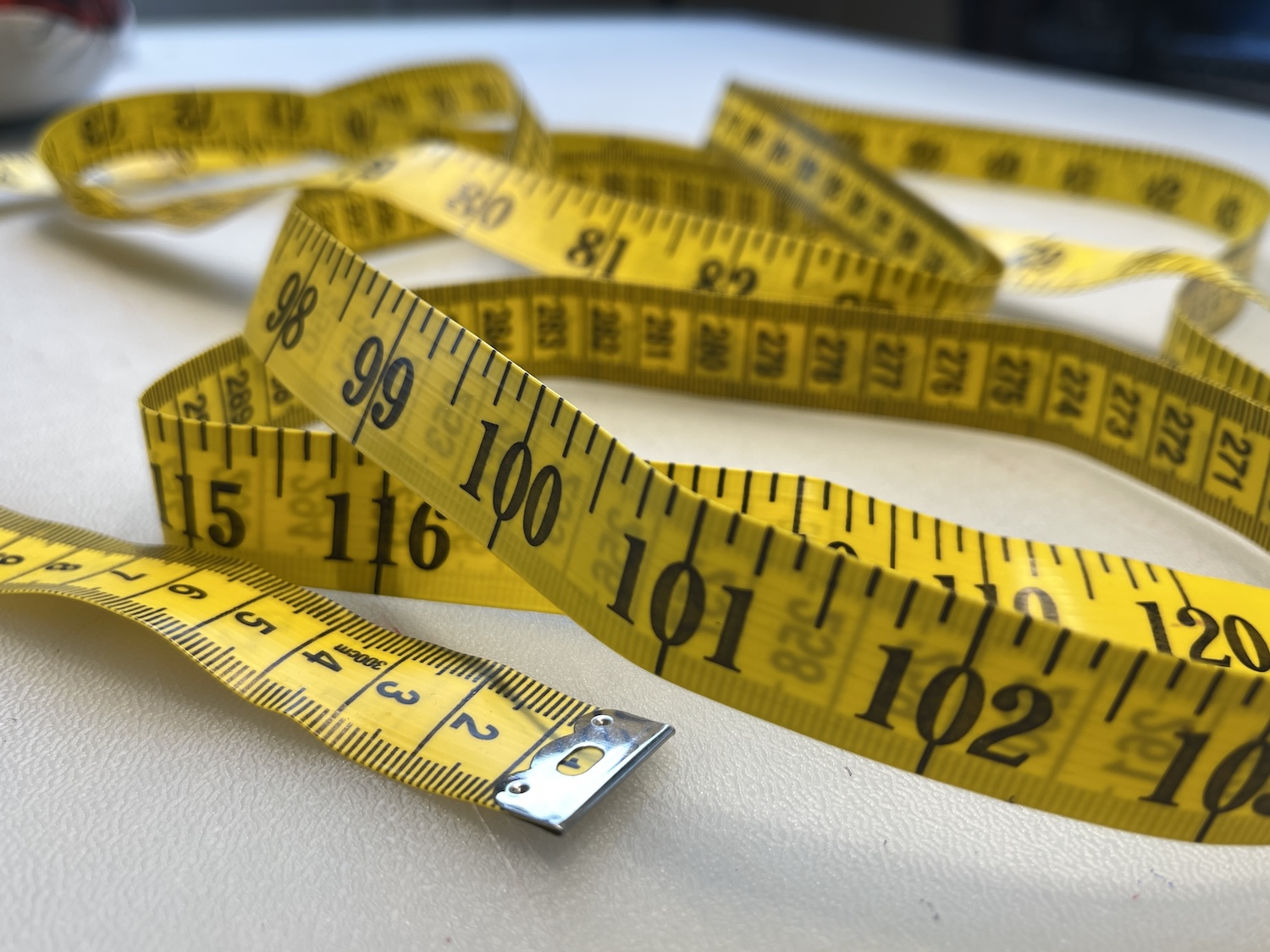
A tape measure for sewing is one of those things you never realised you needed until you absolutely do. Get a good flexible one that measures in both centimetres and inches (useful since patterns can use either), and check it hasn’t stretched over time as old tape measures can give you inaccurate readings.
A couple of tips from my own sewing room: don’t roll your tape measure up for storage instead I hang mine on a hook on the wall, which helps stop it stretching. And if you’re plus-sized, or you fancy sewing curtains one day, look for one that goes up to 120 inches. You’ll be glad you did!
4. Pins and a Pincushion
Pins are one of those small pieces of sewing equipment that make a surprisingly big difference. Glass-headed pins are easier on the fingers and don’t melt if you accidentally iron over them (and you will, at some point, we all do!) A pincushion keeps everything tidy and stops you losing pins in the carpet (or worse, your foot). I use an old tin to store mine, but I’ve also used a magnetic pincushion which is brilliant for picking up any dropped ones quickly. If you ever sew with delicate fabrics, it’s also worth getting some fine pins as they’re much kinder to lightweight materials.
5. Hand Sewing Needles
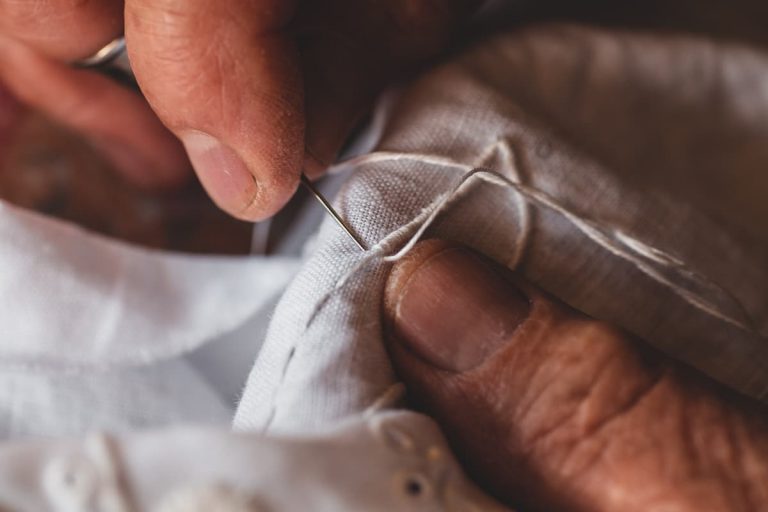
Even if you’re mainly using a machine, you’ll need hand sewing needles for finishing off all those little jobs that are just easier done by hand. A mixed pack of different types of sewing needles is a great starting point, you’ll quickly work out which sizes you reach for most.
(Psst…I have a whole post on types of sewing needles and which to use when.)
6. A Seam Ripper
Ah, the seam ripper. Your best friend and a reminder that mistakes happen to everyone. This little tool unpicks stitches without damaging your fabric and trust me, you will use it, regularly!
In fact, I think of the seam ripper as proof that sewing is a learning process. Every time you use it, you’re learning something. Don’t stress, it’s only fabric and thread, after all.
7. An Iron and Ironing Board
Ironing is genuinely half of sewing. Pressing seams as you go makes such a difference to how your finished project looks, it’s one of those things that separates a make that looks homemade from one that looks properly finished.
You don’t need anything fancy, a decent steam iron and a standard ironing board will do the job. Just make sure you always check your iron is on the right heat setting for your fabric before you press!
One tip though: if you live in a hard water area, use deionised water (or a mix of tap and deionised so check your iron’s instructions as they vary). It’ll keep your iron in much better condition long term.
Always check your iron is on the right heat setting for your fabric before you press — a quick test on a scrap piece first is always worth it.
8. Don’t buy cheap thread
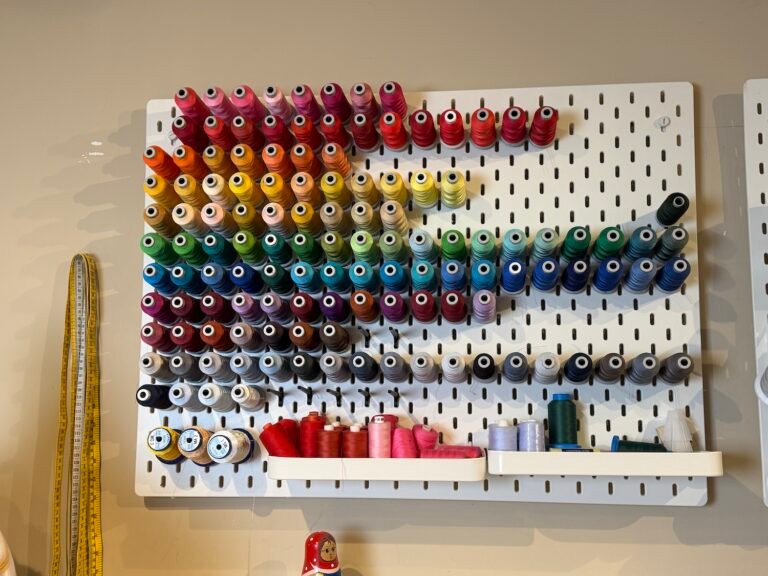
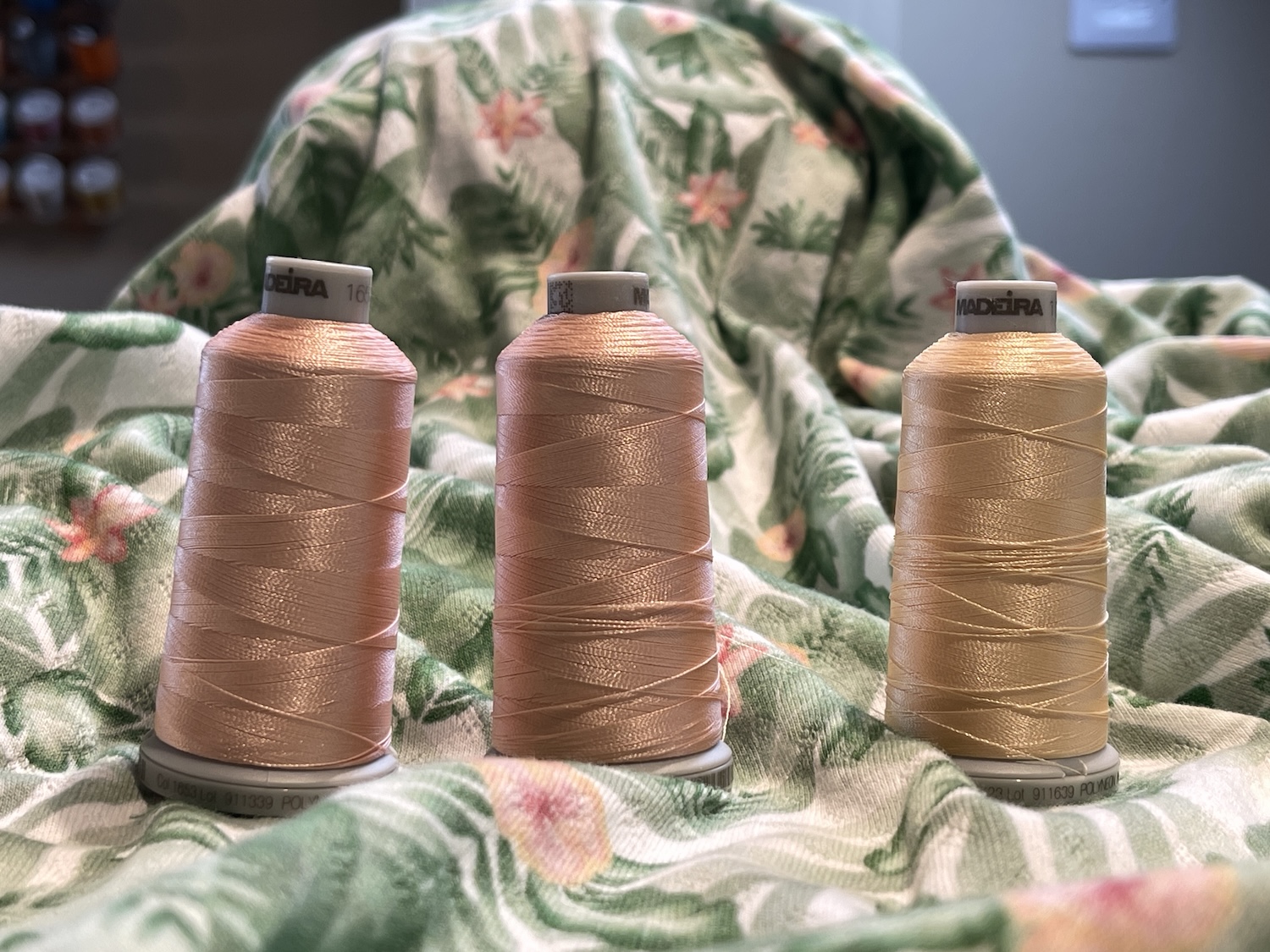
I know it’s tempting when you’re starting out, but poor quality thread breaks constantly, shreds in the machine, and makes the whole experience far more frustrating than it needs to be. A good quality all-purpose polyester thread in a neutral colour (grey is surprisingly versatile) will get you started.
My personal go-to brands are Glide and Isacord, and Gütermann is an excellent choice that’s easy to find in UK shops. I also like to keep some cotton thread to hand, particularly useful when sewing cotton fabrics. For that I reach for Aurifil and Superior Threads.
A Few Extras Worth Having
Once you’ve got the basics sorted, these are the next bits of sewing equipment worth adding to your kit:
- Fabric chalk or marking pen for transferring pattern markings onto fabric
- A ruler or quilting square for measuring and marking straight lines
- Safety pins brilliant for threading elastic and turning straps
- A needle threader because nobody has time to squint at a needle
Where to Buy Sewing Equipment in the UK
If you’re based in the UK, here are some of my favourite places to pick up sewing equipment all tried and tested:
- Hobbycraft great for beginners, good range of basics, often has sales
- John Lewis reliable quality, especially for scissors and irons
- Sewing Direct brilliant online shop, wide range of tools and haberdashery.
- BarnYarns excellent for threads
- Abakhan fantastic for fabric and haberdashery, great value
- Craft House Magic lovely for hand-dyed yarn, project bags and sewing accessories
And of course, don’t overlook your local fabric and haberdashery shops – it’s always lovely to support independent businesses on the high street.
Find out more about my Favourite Sewing Suppliers here.
Ready to Get Started?
Getting your sewing equipment sorted is one of the most satisfying parts of starting out, there’s something lovely about having a little kit that’s just yours.
If you’re not sure what to tackle next, come and join my free Sewing Library it’s packed with beginner guides, free printables and tips to help you get going with confidence. And if you’ve got a question about any of this, just get in touch.
Happy sewing!
Louisa x
The essentials are a sewing machine, fabric scissors (kept strictly for fabric only!), a tape measure, pins and a pincushion, hand sewing needles, a seam ripper, an iron and ironing board, and good quality thread. That’s genuinely all you need to get started.
You can get a solid, reliable beginner’s machine for around £200. Go for the best you can comfortably afford, but avoid anything so feature-heavy it feels overwhelming to use.
Good options include Hobbycraft, John Lewis, Sewing Direct, BarnYarns and Abakhan. Your local fabric and haberdashery shops are also well worth supporting.
No, cheap thread breaks constantly and makes sewing far more frustrating than it needs to be. Gütermann is a great quality brand widely available in the UK, and a good starting point for any beginner.
Change it when you notice skipped stitches, a dull thudding sound from the machine, or snagged threads. A fresh needle makes a bigger difference than most beginners expect.