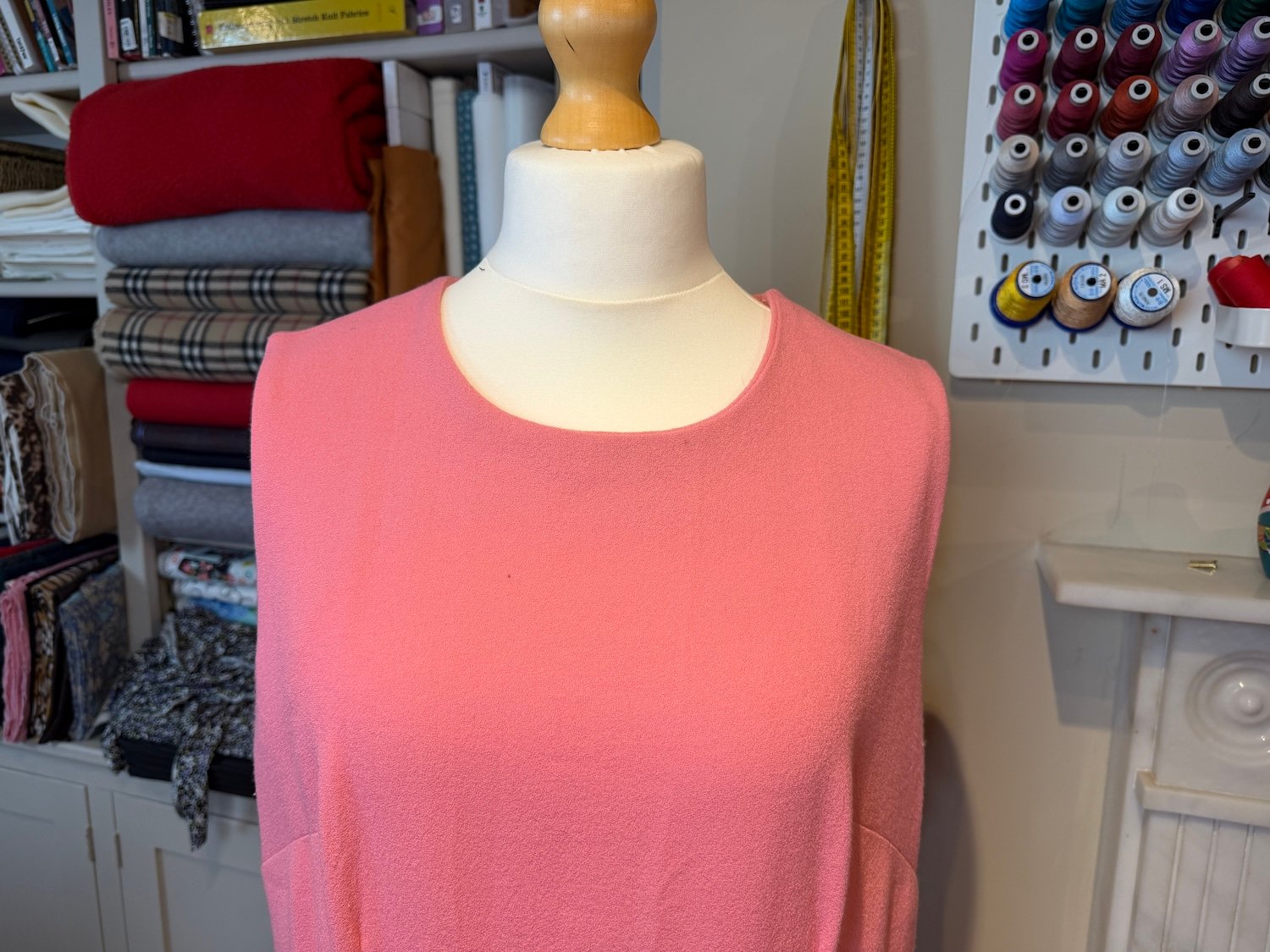
This guide covers everything a beginner needs to know before sewing their first sundress, including which patterns to consider, what fabric to choose, which skills to practice first, and how to approach fitting and neckline finishes.
There is something exciting about sewing your own dress. The idea of choosing the fabric, cutting the pieces, and ending up with something you can actually wear is one of those sewing goals that keeps a lot of beginners motivated through the early stages of learning.
A sundress is a brilliant first dress project particularly if you go sleeveless, to keep it simple. That said, it’s worth going in with a clear plan. A dress involves more pieces, more decisions and more fitting than a simple bag or cushion cover, so a little preparation goes a long way.
I’ll be upfront here: dresses aren’t actually something I sew regularly myself, though I do have a knit dress in progress at the moment! But I’ve been around patterns and fabric long enough to know what makes a beginner dress project succeed or struggle, and that’s exactly what I want to share with you here.
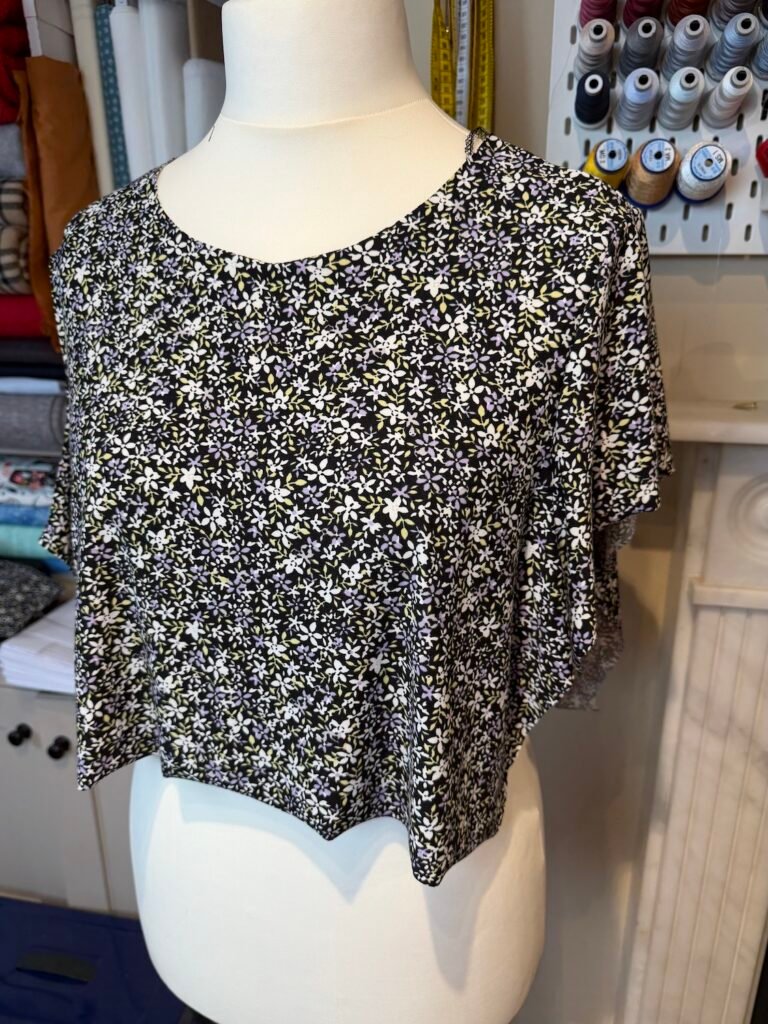
Which sewing pattern should you use to sew a sundress?
Choosing the right pattern is probably the most important decision you’ll make before you even cut into your fabric. For a beginner’s first sundress, you want something with clear instructions, minimal fiddly details and ideally no zip.
Two patterns currently on my wish list that I think would work beautifully for a first dress project are from Pattern Emporium, a great indie pattern company with well-written instructions:
The Go To Dress and Skirt: a versatile pattern that comes in both sleeveless and sleeved versions, making it a great all-rounder.
The Meet You There Dress: another lovely option available sleeveless or with short or long sleeves, so you can choose the version that suits you and the season.
Both are available from Pattern Emporium’s website and can be printed at home or ordered as a printed copy. For a sleeveless sundress, choose the sleeveless view of whichever pattern appeals to you as it keeps things simpler for a first make.
Which fabric should you choose to sew a sundress?
For a first sundress, a lightweight cotton is my recommendation every time. It’s breathable (important for a summer dress!), fairly stable to sew, and widely available in a huge range of prints and colours. It’s also forgiving enough that small mistakes won’t show badly, which is exactly what you want when you’re learning.
Good options to look for include cotton lawn, cotton poplin or a cotton-linen blend. All are light, comfortable and handle well on a sewing machine.
How much fabric you’ll need depends on the pattern and your size, so always check the pattern’s fabric requirements before you buy. As a rough guide, most simple dress patterns need between 1.5 and 2.5 metres, but check your specific pattern to be sure.
One tip: buy a little extra. Even experienced sewers do this. A bit of extra fabric gives you room to practice a tricky technique like the neckline finish before you do it on the real thing.
Skills to practice before you start sewing a sundress
A sundress isn’t a beginner’s very first project, but it’s absolutely achievable once you’ve got a few basics under your belt. Here’s what I’d suggest practising first:
Straight stitching
Confident, consistent straight seams are the foundation of everything. Practice sewing along a line before you cut into your dress fabric.
Accurate seam allowances
A dress has multiple pieces that all need to match up. Getting your seam allowances consistent matters more here than on a simpler project. (Have a read of my post on seam allowances https://sewlouisa.com/what-is-a-seam-allowance-and-why-is-it-important/ if this is new to you.)
Pressing as you go
Pressing seams open or to one side as you sew makes a huge difference to the finished result. Get into this habit early.
Things Sewing Beginners Often Don’t Think About
Making sure the dress fits
Fitting is probably the most challenging part of making any garment, and a dress is no exception. Commercial patterns are drafted for a standard set of measurements, and almost nobody is a perfect match for a single size. You may need to grade between sizes, adjust the length, or make other tweaks.
Fitting is genuinely a topic that deserves its own post (and it’ll get one!), but for now the most important thing to know is: make a test garment first. Cut your dress out of cheap fabric, sew it up and try it on. Any adjustments you need to make will be obvious, and you can transfer them to your pattern before cutting into the fabric you actually love.
Don’t worry about adding a zip
My honest advice: avoid a zip for your first dress. Zips add a layer of complexity that can be really discouraging when you’re still getting to grips with everything else. Look for a pattern that uses elastic at the waist or a simple pull-on style instead. You can always tackle zips in a future project once you’ve built your confidence. (That said, if your heart is set on a zip, do practice it on scrap fabric several times before sewing it into your dress.)
Finishing the neckline
This is often the trickiest part of a dress. A puckered or wobbly neckline can make an otherwise lovely dress look unfinished, but a neat one makes the whole thing look professional. Whatever finish your pattern uses, practice it on a scrap piece of the same fabric before you do it for real. It’s worth every minute.
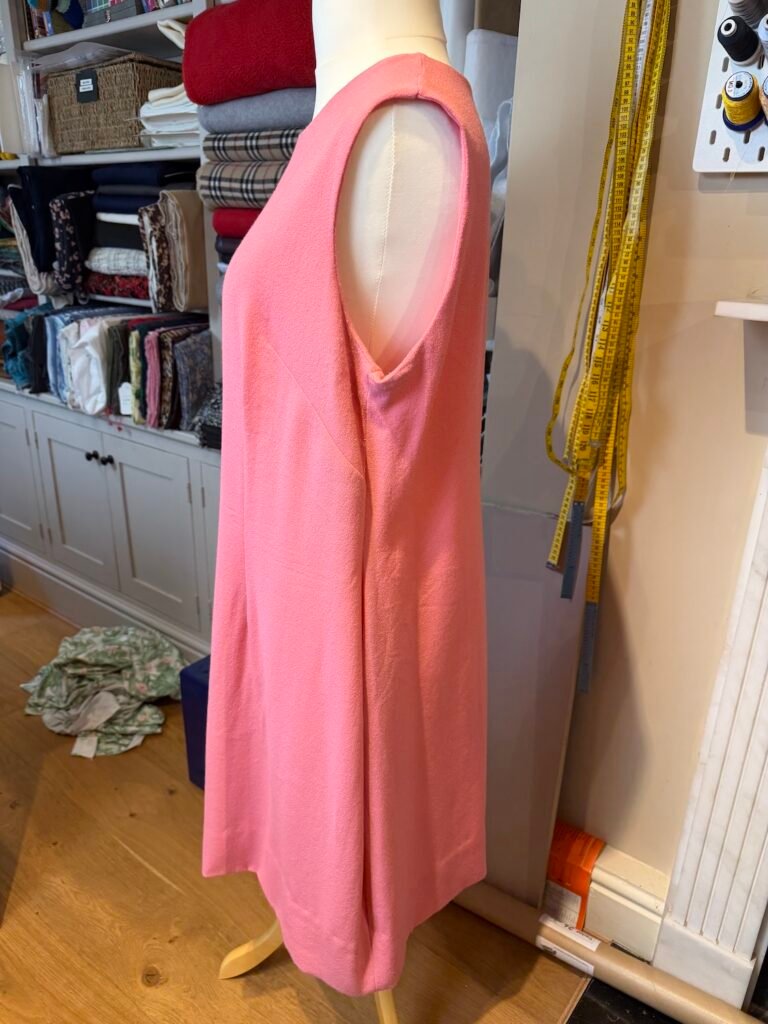
My number one piece of advice when you’re sewing a sundress
Take it slow, and remember that unpicking doesn’t mean you’ve failed.
Sewing a dress is a bigger undertaking than a lot of beginner projects, and it will probably take longer than you expect. That’s completely fine. Every time you have to unpick and redo something, you’re learning. It’s only fabric and thread, and the only way to get better is to keep going.
Make that test garment. Take your time with the neckline. Press every seam. And when it all comes together, and it will, you’ll feel absolutely brilliant.
Ready to Give it a Go?
If you’re building up to your first dress, make sure you’ve got the basics sorted first. My posts on sewing equipment, seam allowances and grainline are all good ones to have under your belt before you start.
And come and join my free Sewing Library where there’s plenty of beginner guidance in there to help you get ready for a project like this.
Got a question? Pop me an email, I’d love to help.
Happy sewing! Louisa x
Frequently Asked Questions
A sleeveless sundress is a great first dress project, but it’s best tackled once you’re comfortable with basic stitching and seam allowances. Practice your neckline finish on scrap fabric first, choose a simple pattern without a zip, and make a test garment before cutting into your good fabric.
A lightweight cotton such as cotton lawn or cotton poplin is ideal for a first sundress. It’s breathable, stable to sew and widely available in the UK in a huge range of prints.
Not necessarily, and for a first dress I’d recommend choosing a pattern without one. Look for styles that use elastic at the waist or a pull-on silhouette. Zips are a skill worth learning but are best tackled once you’ve built a bit of confidence first.
This depends on the pattern and your size, so always check the fabric requirements on your specific pattern. Most simple dress patterns need between 1.5 and 2.5 metres. Buy a little extra so you have some to practice techniques on before sewing the real thing.
Focus on consistent straight stitching, accurate seam allowances and pressing seams as you go. Most importantly, practice your neckline finish on scrap fabric before you attempt it on the garment itself. That’s often where beginner dress projects run into trouble.